
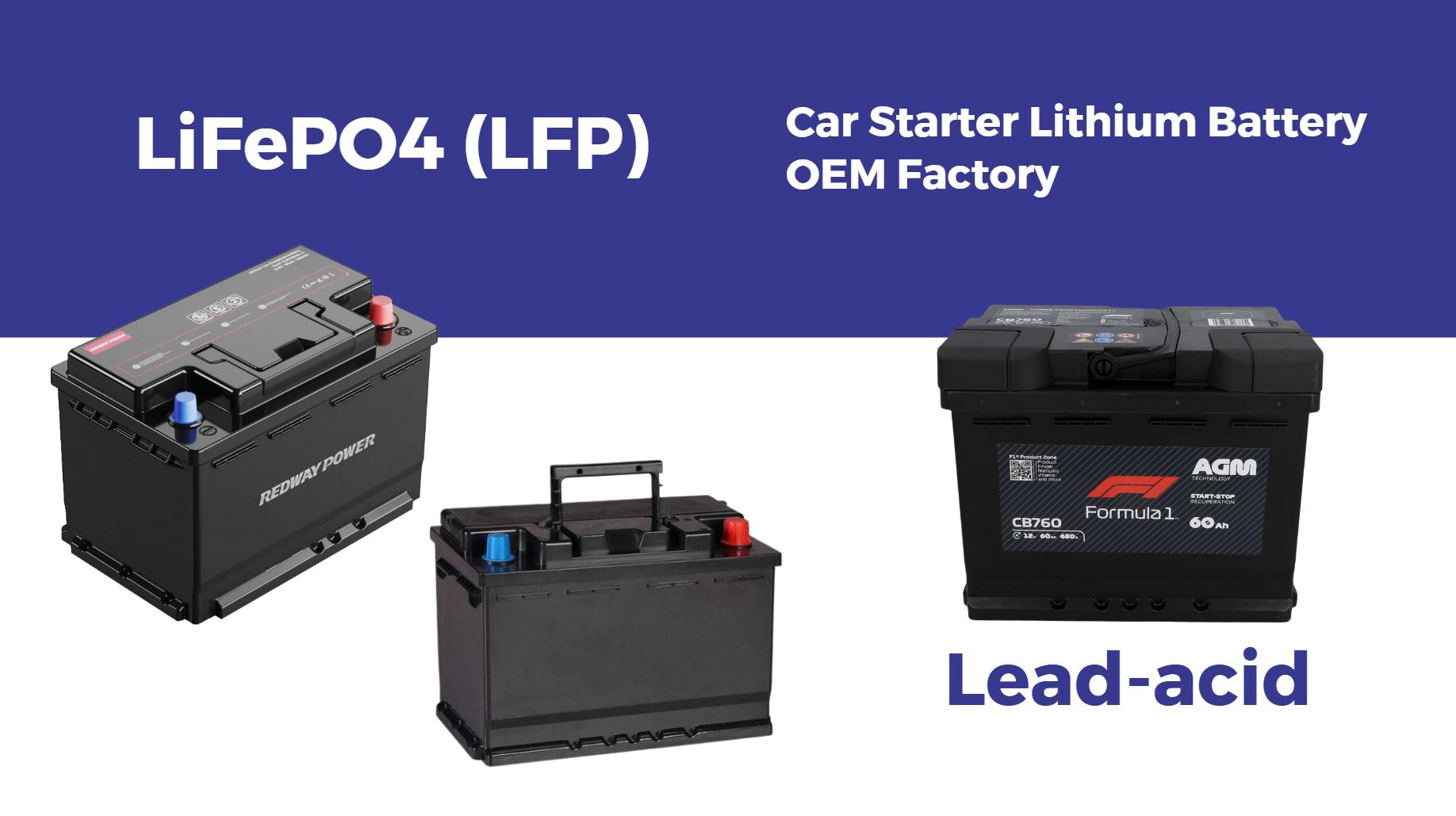
How Do LiFePO4 Car Starter Batteries Compare to Lead-Acid?
LiFePO4 car starter batteries surpass lead-acid alternatives with significantly longer lifespans, lighter weight, faster charging, and stable performance under extreme temperatures. Although upfront costs are higher, total ownership is lower due to reduced replacements and zero maintenance. Redway ESS delivers high-performance LiFePO4 batteries that provide reliable, safe, and efficient automotive power solutions.
What Are the Key Differences in Lifespan Between LiFePO4 and Lead-Acid?
LiFePO4 batteries typically achieve 2,000–5,000 charge cycles, compared to 200–500 cycles for lead-acid batteries. Their capacity retention remains around 80% after 3,000 cycles, whereas lead-acid batteries often degrade by 50% within 18 months. This durability makes LiFePO4 ideal for vehicles used intermittently, such as classic cars, seasonal machinery, or fleet vehicles requiring long-term reliability.
| Battery Type | Typical Lifespan | Capacity Retention After 3,000 Cycles |
|---|---|---|
| LiFePO4 | 5–10 years | 80% |
| Lead-Acid | 3–5 years | 50% |
Redway ESS forklift and automotive batteries leverage this technology to extend operational life while minimizing maintenance interventions.
How Does Weight Impact Automotive Battery Performance?
LiFePO4 batteries are 70% lighter than lead-acid alternatives, with a 12V 90Ah battery weighing around 6–9 lbs versus 30–50 lbs for lead-acid. Reduced weight improves fuel efficiency by 0.5–1 MPG in internal combustion vehicles and increases EV range. Compact and lightweight designs allow flexible mounting, including vertical positioning without acid leakage risks.
Weight distribution also enhances vehicle dynamics: a 40-pound reduction on the front axle can improve handling responsiveness by 12% in performance vehicles. Heavy lead-acid batteries accelerate suspension wear, often increasing control arm replacements in vehicles over 100,000 miles.
| Battery Type | Group Size 24 | Group Size 34 |
|---|---|---|
| Lead-Acid | 39 lbs | 47 lbs |
| LiFePO4 | 6.3 lbs | 8.8 lbs |
What Are the Cost Differences Over Time?
LiFePO4 batteries cost 2–3 times more upfront ($200–$500 vs $100–$200), but their lifespan of 10 years versus 3–5 years for lead-acid results in 40–60% lower total ownership costs. Reduced maintenance—no water refills, terminal cleaning, or sulfation repairs—adds to savings, typically around $85/year. Deep cycle capabilities allow auxiliary power use in RVs, eliminating separate house batteries, and potential tax incentives further offset costs.
Redway ESS batteries are engineered to optimize long-term value, offering fast charging, low maintenance, and high cycle life for commercial and personal automotive applications.
Which Battery Performs Better in Extreme Temperatures?
LiFePO4 batteries operate reliably from -20°C to 60°C, with minimal capacity loss at sub-zero temperatures. Lead-acid batteries lose up to 50% capacity below 0°C. Thermal stability ensures consistent cold starts, delivering 800–1,200 CCA, compared to lead-acid’s 20–40% drop under freezing conditions. LiFePO4’s stable chemistry also reduces the risk of overheating during high-temperature operation.
How Do Charging Characteristics Differ Between Technologies?
LiFePO4 batteries reach 90% charge in about 30 minutes using a 30A charger, compared to 4–6 hours for lead-acid batteries. They tolerate irregular charging without sulfation damage and maintain 95% charge after 12 months of storage, whereas lead-acid self-discharges completely in 6–8 months. These characteristics make LiFePO4 particularly suited for vehicles requiring rapid recharge cycles and intermittent usage.
Are There Hidden Installation Challenges?
Some vehicles, especially pre-2010 models, may require voltage regulator adjustments due to LiFePO4’s 13.6V float voltage. European luxury vehicles sometimes need CANbus reprogramming for full integration. Using proper terminal adapters (SAE to M8 bolts) and vibration-resistant mounting trays ensures compatibility and safety. Redway ESS provides OEM-ready solutions to simplify installation and maintain reliable performance.
What Do Real-World Users Report About Performance?
User surveys indicate:
-
89% report faster engine starts
-
76% note fuel efficiency improvements
-
92% would repurchase LiFePO4 batteries
Initial setup costs and lack of OEM support for older vehicles are common concerns, but long-term performance and low maintenance generally outweigh these barriers.
How Are New Technologies Enhancing LiFePO4 Batteries?
Recent innovations include graphene-enhanced anodes increasing CCA by 30%, self-healing electrolytes to prevent dendrite formation, and integrated Bluetooth BMS for smart load management. Solar-compatible hybrid models expand applications for RVs and auxiliary power. Redway ESS continuously integrates these advancements into its lithium battery lineup to deliver higher performance, reliability, and safety.
Redway ESS Expert Views
“LiFePO4 batteries represent a transformative upgrade in automotive energy storage. Their high cycle life, low weight, and thermal stability allow both conventional and electric vehicles to achieve reliable starts under extreme conditions. By integrating smart BMS technology, we can optimize charging strategies, monitor battery health, and extend operational lifespan significantly. Redway ESS focuses on combining innovation with OEM compatibility to deliver sustainable, high-performance solutions.”
Conclusion
LiFePO4 car starter batteries offer superior lifespan, lighter weight, faster charging, and robust performance in extreme conditions. While upfront costs are higher, reduced maintenance, long-term reliability, and total ownership savings make them the superior choice for automotive applications. Redway ESS provides industry-leading batteries engineered for optimal efficiency, safety, and performance, supporting both fleet and personal vehicles.
FAQs
Q: Can LiFePO4 batteries handle high electrical loads?
A: Yes, they deliver 3x higher burst currents (1,500–2,000A) than lead-acid.
Q: Are LiFePO4 batteries compatible with standard chargers?
A: They require lithium-profile chargers (14.2–14.6V). Using lead-acid chargers may reduce lifespan by 40%.
Q: Do LiFePO4 batteries require maintenance?
A: No, they are maintenance-free, with no water refilling, terminal cleaning, or sulfation concerns.
Q: Are LiFePO4 batteries safe in extreme temperatures?
A: Yes, they operate from -20°C to 60°C with minimal capacity loss, unlike lead-acid batteries.
Q: How long do LiFePO4 batteries typically last?
A: They last 5–10 years (2,000–5,000 cycles), significantly longer than lead-acid batteries.