
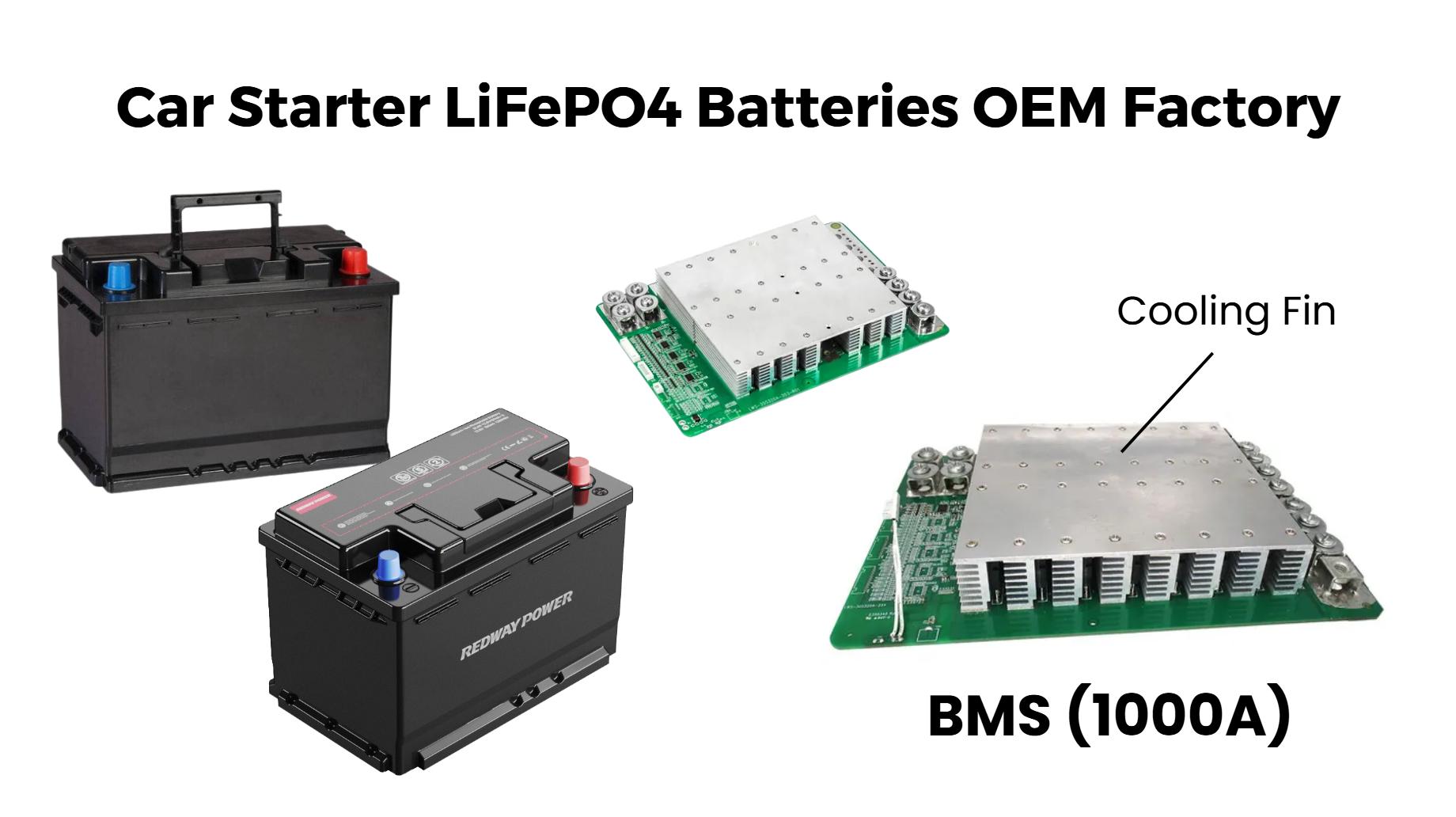
How Does a Battery Management System (BMS) Help LiFePO4 Batteries?
A Battery Management System (BMS) is crucial for LiFePO4 batteries, ensuring optimal performance, safety, and longevity. By monitoring voltage, current, and temperature, it prevents overcharging, deep discharges, and thermal stress. BMS also balances cells to maintain uniform aging and supports efficient energy use, making LiFePO4 batteries reliable for EVs, solar storage, and industrial applications.
What Core Functions Does a BMS Perform for LiFePO4 Batteries?
A BMS serves as the central controller for LiFePO4 battery health and performance. Its primary functions include:
-
Voltage Monitoring: Tracks individual cell voltages with high precision (±0.5%), ensuring cells remain within safe operating ranges.
-
State-of-Charge (SOC) Estimation: Uses coulomb counting and advanced algorithms like Kalman filters to estimate SOC with up to 97% accuracy.
-
Temperature Control: Maintains cell temperature within safe limits (typically -20°C to 60°C), preventing thermal degradation.
-
Current Management: Limits charge and discharge currents to avoid overloading and stress.
-
Safety Interventions: Automatically disconnects circuits during faults such as short-circuits or overcurrent events.
Redway ESS leverages high-precision BMS designs in its forklift and car starter batteries, ensuring reliable performance across demanding applications.
How Does Cell Balancing Prolong LiFePO4 Battery Lifespan?
Cell balancing prevents uneven wear among battery cells. There are two main methods:
| Balancing Type | Efficiency | Energy Loss | Implementation Cost |
|---|---|---|---|
| Passive | 65-75% | 35W per cell | $0.50 per cell |
| Active | 88-94% | 8W per cell | $2.75 per cell |
-
Passive Balancing: Dissipates excess charge as heat through resistors, typically 100mA, reducing voltage differences.
-
Active Balancing: Transfers energy between cells efficiently (85-92%), maintaining uniform SOC and extending cycle life by up to 40% in 48V packs.
Advanced BMS units can predict energy redistribution needs during partial charge operations, reducing stress on weaker cells and improving total energy throughput by over 25% in solar applications.
Which Protection Mechanisms Prevent LiFePO4 Battery Failures?
A robust BMS includes multi-layer protection to avoid failure:
-
Over-voltage and under-voltage cutoffs
-
Overcurrent and short-circuit detection
-
Overtemperature protection
-
Cell rupture and isolation monitoring
-
Redundant MOSFETs to handle high load currents
This reduces failure rates dramatically compared to unprotected lithium batteries. Redway ESS implements UL-certified systems with integrated safety redundancies in all OEM LiFePO4 solutions.
Why Is Temperature Management Critical for LiFePO4 Efficiency?
Temperature directly affects LiFePO4 battery conductivity and cycle life:
| Temperature Range | Charge Efficiency | Cycle Life Impact |
|---|---|---|
| -20°C to 0°C | 48% | 55% reduction |
| 15°C to 35°C | 98% | Optimal |
| 45°C to 60°C | 82% | 30% reduction |
-
Cooling & Heating: BMS controls fans, liquid cooling, or PTC heaters to maintain 15-35°C range.
-
Thermal Sensors: Distributed per-cell sensors (0.1°C resolution) detect hot spots for dynamic cooling.
-
Phase-Change Materials: Absorb thermal spikes to prevent localized degradation.
Proper thermal management improves energy efficiency from 85% to 93%, especially in EV and grid-scale storage systems.
How Does BMS Architecture Impact Renewable Energy Integration?
Modular BMS designs with CAN bus or SunSpec Modbus support scalable battery banks up to 1500V DC. Predictive charge control based on weather forecasts increases solar self-consumption by up to 22%. Redway ESS integrates these architectures in industrial and residential energy storage systems to reduce energy conversion losses and maximize renewable utilization.
What Innovations Are Shaping Next-Gen BMS Technology?
Emerging BMS advancements include:
-
AI-driven health monitoring predicting battery failure
-
Wireless mesh networks for real-time monitoring
-
Solid-state current sensors with ±0.25% accuracy and compact form factor
These innovations push system uptime above 99.9% for mission-critical applications.
Redway ESS Expert Views
“Integrating intelligent BMS with adaptive impedance tracking has transformed LiFePO4 reliability. Our systems detect micro-short events months before failures, while AI-assisted balancing ensures uniform cell aging. Redway ESS prioritizes both safety and performance, making these batteries ideal for high-demand industrial and automotive applications.” — Redway ESS Engineering Team
Conclusion
A sophisticated BMS is essential for maximizing LiFePO4 battery potential. Multi-layered protection, precise cell balancing, and advanced thermal management significantly extend battery lifespan, improve safety, and enhance efficiency. Redway ESS continues to innovate, delivering BMS-integrated LiFePO4 solutions that meet industrial, automotive, and renewable energy demands.
FAQs
Can LiFePO4 batteries operate without a BMS?
Technically possible, but risks overcharging, deep discharging, and reduced lifespan. Using a BMS is strongly recommended.
How often should BMS firmware be updated?
Industrial systems require annual updates; consumer-grade systems may update every 2–3 years unless anomalies occur.
What is the typical cost range for a quality BMS?
From $50 for 12V basic units to $15,000 for large industrial systems. Mid-range 48V systems with monitoring cost $300–$600.
How does BMS improve energy efficiency?
Through optimized charge curves, low-resistance switches, cell balancing, and dynamic current management, efficiency can exceed 95%.
What safety measures are included in BMS for LiFePO4 packs?
Overcharge/over-discharge protection, short-circuit isolation, thermal shutdowns, cell impedance monitoring, and fire-resistant enclosures are standard.