
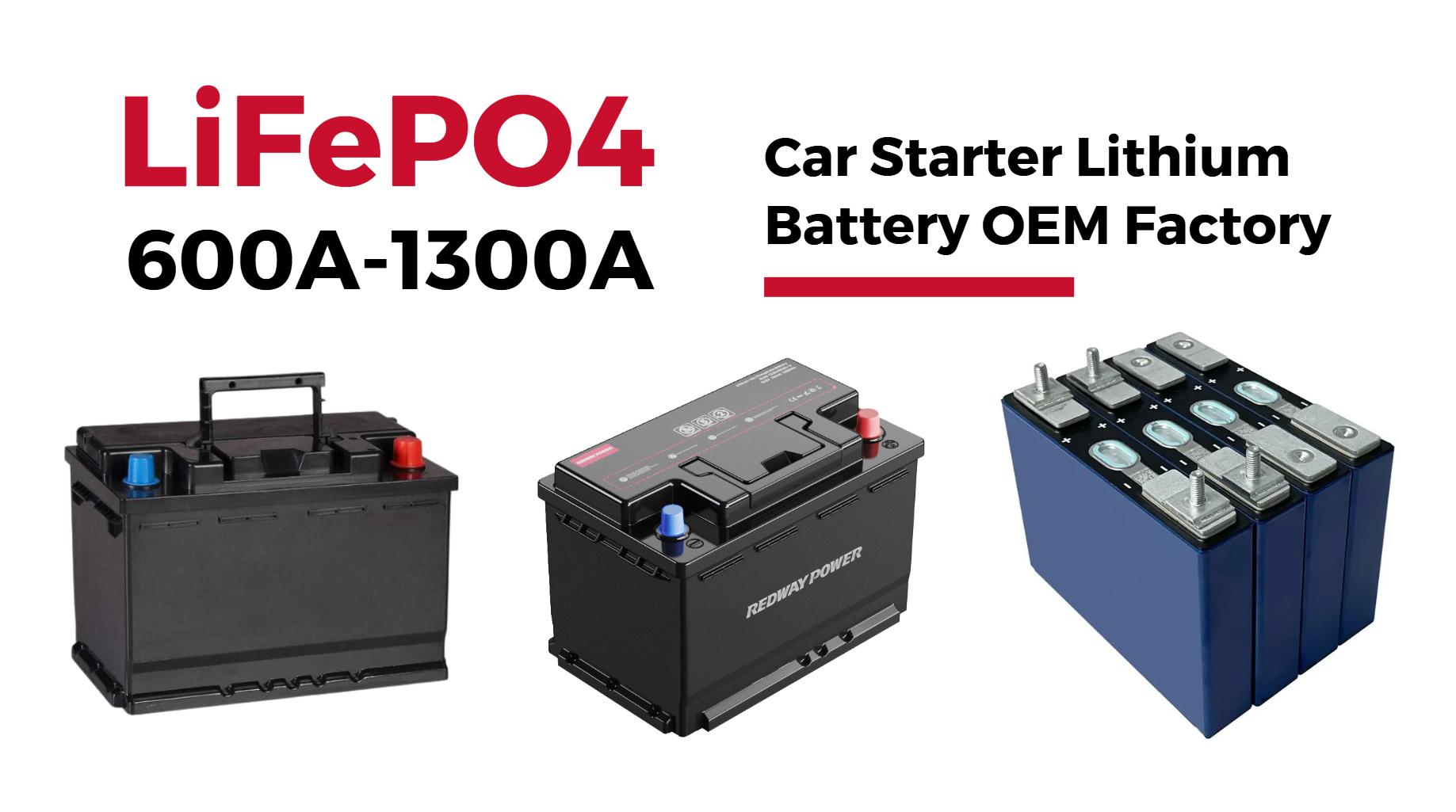
What’s New in LiFePO4 Car Starter Battery Technology?
LiFePO4 car starter batteries have evolved to provide faster charging, higher energy density, and extended lifespans compared to traditional lead-acid batteries. Modern designs integrate smart Battery Management Systems (BMS), graphene-enhanced electrodes, and advanced thermal management, delivering reliable cold-start performance, lightweight construction, and exceptional efficiency, making them ideal for contemporary automotive applications.
How Do LiFePO4 Batteries Outperform Traditional Lead-Acid Options?
LiFePO4 batteries significantly exceed lead-acid options in energy density, cycle life, and efficiency. With energy density ranging from 90–160 Wh/kg, they allow for lighter, more compact designs. Voltage remains stable at low charge levels, and their lifespan of 2,000–5,000 cycles dwarfs the 300–500 cycles typical of lead-acid batteries. Fast charging and broad operating temperature ranges (-20°C to 60°C) enhance versatility for automotive applications.
Recent developments include hybrid designs combining LiFePO4 chemistry with supercapacitors, providing instantaneous power delivery up to 1,500 CCA while maintaining stable voltage in extreme conditions. Field data show LiFePO4 batteries retain 85% capacity after seven years of daily use, compared with lead-acid batteries requiring replacement within three years.
| Parameter | LiFePO4 | Lead-Acid |
|---|---|---|
| Cycle Life | 2,000–5,000 | 300–500 |
| Charge Efficiency | 95–98% | 70–85% |
| Weight (Group 24) | 4.5 kg | 15 kg |
What Environmental Benefits Do LiFePO4 Car Batteries Offer?
LiFePO4 batteries are environmentally friendly due to their non-toxic chemistry and high recyclability. Nearly 99% of their materials—including lithium, iron, and phosphate—can be recovered through closed-loop systems. Longer lifespans reduce resource consumption by up to 60% over a decade, while production emits 40% less CO2 compared to lead-acid alternatives. Advanced recycling techniques recover 97% of battery materials, and phosphate chemistry prevents groundwater contamination.
Redway ESS incorporates these eco-friendly strategies in its manufacturing process, emphasizing sustainability without compromising performance. Solar-powered production and efficient recycling initiatives further reduce environmental impact, making LiFePO4 a responsible choice for automotive OEMs.
How Has Graphene Technology Improved LiFePO4 Performance?
Graphene-enhanced electrodes increase electrical conductivity and lower internal resistance by 20–30%, improving charge/discharge rates and extending battery life. Graphene-enabled LiFePO4 batteries retain 95% capacity after 1,500 cycles, outperforming standard models at 80%. Enhanced thermal management allows continuous high-current output without degradation, making these batteries especially suitable for cold-start and high-load automotive scenarios.
Why Are LiFePO4 Batteries Ideal for Start-Stop Vehicle Systems?
Start-stop systems demand frequent high-current bursts that accelerate lead-acid battery wear. LiFePO4 batteries endure up to five times more cycles, recover 99% of energy after deep discharges, and maintain low self-discharge (3% per month), ensuring readiness even after prolonged idle periods. This efficiency reduces fuel consumption by 5–8% in urban driving, enhancing overall vehicle performance.
How Do Smart BMS Systems Optimize LiFePO4 Battery Lifespan?
Intelligent BMS monitors cell voltages, prevents overcharging and undercharging, and adjusts charge rates based on temperature. Below 0°C, charging slows to avoid lithium plating. Built-in diagnostics detect aging cells, redistribute loads, and allow firmware updates to sustain optimal performance. These features significantly reduce wear and maximize battery longevity, making them ideal for modern automotive applications.
Redway ESS Expert Views
“LiFePO4 is revolutionizing automotive energy. Our graphene-enhanced electrodes and AI-driven BMS ensure reliable, long-lasting performance even in extreme conditions. We anticipate LiFePO4 starters powering over a third of new vehicles by 2027, driven by automakers’ demand for lighter, durable, and eco-friendly solutions.” — Redway ESS Technical Team
How Have LiFePO4 Car Starter Batteries Improved Longevity?
Advancements in electrode coatings, optimized cell balancing, and hybrid cathodes reduce degradation, while new electrolytes minimize lithium plating. Smart BMS systems prevent over-discharge and balance loads across cells. Modern LiFePO4 batteries achieve 3,000–5,000 cycles, lasting 2–3 times longer than previous models. Rugged casings resist vibration, ensuring consistent performance throughout the vehicle’s lifespan.
What Innovations Enable Fast-Charging LiFePO4 Automotive Batteries?
Fast charging is enabled by nanoscale lithium titanate anodes, high-purity electrolytes, and 3D conductive matrices, achieving 80% charge in as little as 15 minutes. Silicon-doped cathodes enhance ion mobility, while active thermal control maintains optimal charging temperatures of 25–40°C. Current designs support 4C–5C charge rates without lithium plating, delivering up to 98% efficiency.
| Feature | Benefit |
|---|---|
| Nanoscale lithium titanate anodes | Faster charge acceptance |
| Silicon-doped cathodes | Improved ion mobility |
| Active thermal control | Maintains safe, consistent temperatures |
| 3D conductive matrices | Uniform current distribution |
How Are LiFePO4 Starter Batteries Enhanced for Low Temperatures?
Low-viscosity ester electrolytes maintain performance down to -40°C, while nickel-doped cathodes improve ion conductivity. Built-in self-heating systems activate below 0°C using battery power, ensuring reliable cold starts. Modern LiFePO4 batteries retain 85% capacity at -30°C, outperforming older models that drop to 50%, making them dependable for cold-climate vehicles.
Why Are Thermal Management Systems Crucial for LiFePO4 Car Batteries?
Thermal management prevents performance loss above 45°C and resistance spikes below -20°C. Phase-change materials absorb heat during fast charging, and liquid cooling plates maintain ±2°C uniformity across cells. These systems extend battery life by up to 40% compared to passive cooling and are essential for warranty compliance in extreme environments.
What Designs Make LiFePO4 Automotive Batteries Lightweight?
Prismatic cells with laser-welded construction reduce unnecessary casing. Carbon-fiber reinforced polymer housings cut weight by 60% compared to steel, while graphene-enhanced anodes further lower material usage. Honeycomb cell structures improve strength-to-weight ratios without sacrificing capacity. Redway ESS leverages these design innovations to deliver lightweight, high-performance batteries.
How Does Smart BMS Integration Benefit LiFePO4 Starter Batteries?
AI-powered BMS predicts potential cell failures months in advance, balances aging differences, and monitors real-time impedance to prevent sudden failures. Cloud connectivity allows adaptive charging and bidirectional power flow. OEM trials report a 75% reduction in warranty claims, making these batteries ideal for vehicle-to-load applications.
Conclusion
LiFePO4 car starter batteries set a new benchmark for automotive energy storage, offering rapid charging, extended lifespan, lightweight design, and reliable cold-weather performance. Redway ESS exemplifies industry leadership through graphene-enhanced technology, intelligent BMS integration, and sustainable production. Automotive OEMs and EV manufacturers can benefit from these batteries’ superior performance, efficiency, and environmental advantages, making them a strategic choice for future mobility solutions.
FAQs
Can LiFePO4 batteries be used in older vehicles?
Yes, if the 12V system is compatible and alternator output is sufficient. Some vehicles may need a voltage regulator.
Do LiFePO4 batteries require specialized chargers?
Optimal charging is achieved with lithium-profile chargers, though many modern chargers automatically adjust for battery type.
Are LiFePO4 batteries safe in collisions?
Yes, stable chemistry and robust casings reduce fire risk. Batteries should be disconnected as a precaution after an accident.
How fast can LiFePO4 batteries charge?
They support 4C–5C charge rates, reaching 80% in approximately 15 minutes with thermal management.
Why are LiFePO4 batteries environmentally friendly?
They are cobalt-free, nearly fully recyclable, and produce lower CO2 emissions than lead-acid alternatives, reducing environmental impact over time.