
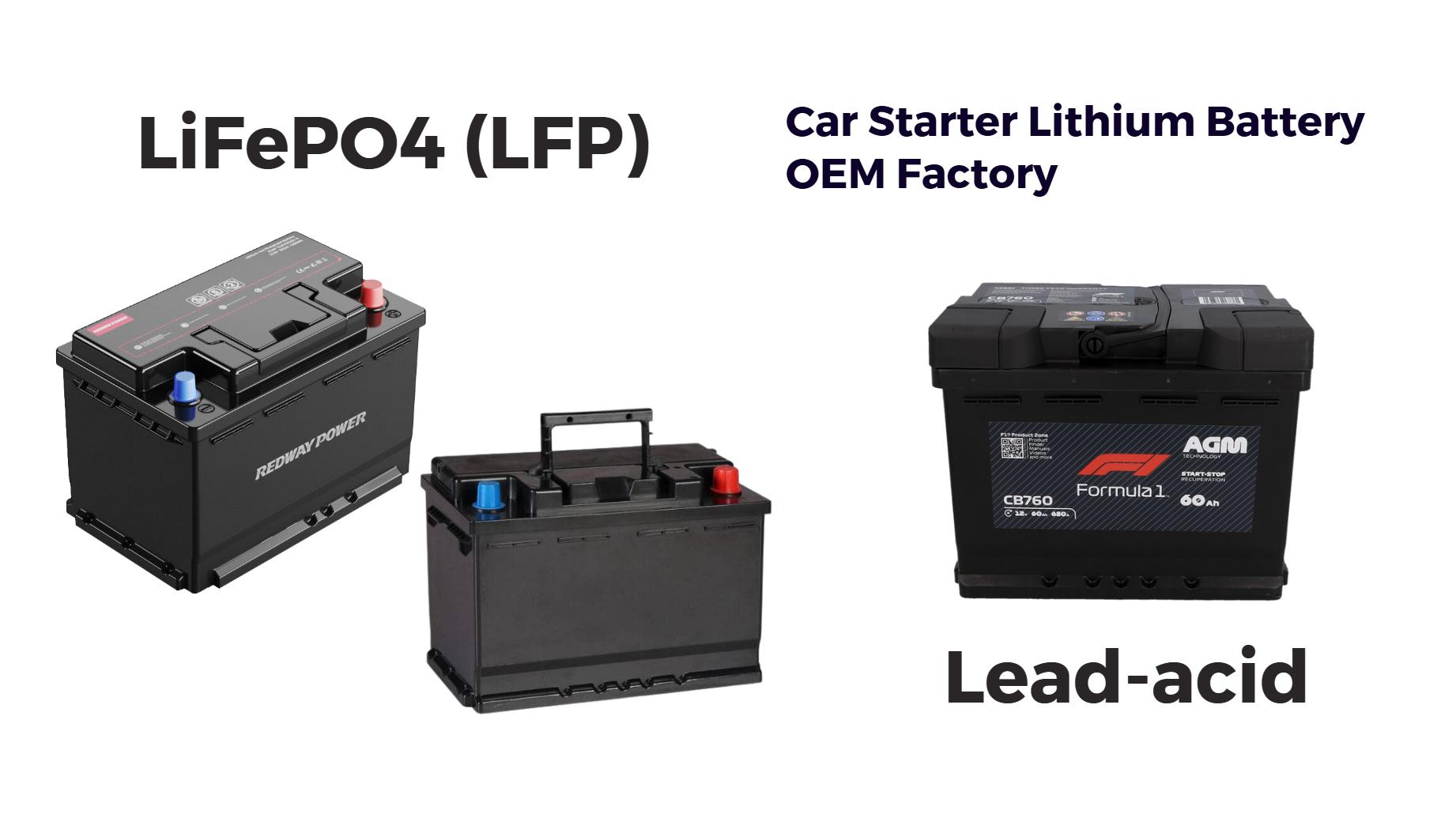
Why Are LiFePO4 Car Starter Batteries More Efficient Than Lead-Acid?
LiFePO4 car starter batteries deliver superior performance compared to lead-acid batteries due to higher energy efficiency, faster charging, consistent voltage output, and exceptional cold-cranking ability. With longer lifespans and lighter weight, they offer reliable, maintenance-free operation across extreme temperatures, making them ideal for modern automotive applications. Redway ESS provides advanced LiFePO4 solutions for both commercial and consumer vehicles.
How Do LiFePO4 Batteries Work Differently Than Lead-Acid?
LiFePO4 batteries operate using lithium iron phosphate chemistry, with a stable phosphate cathode allowing rapid ion movement for quick energy discharge. Lead-acid batteries rely on lead plates in sulfuric acid, generating energy through slower chemical reactions. LiFePO4 reaches 95–98% efficiency, while lead-acid loses 15–30% of energy as heat. This ensures instant cranking power even at low states of charge.
The crystalline structure of LiFePO4 enables three-dimensional ion pathways, delivering high peak currents without voltage sag. During discharge, lithium ions flow between the anode and cathode via organic electrolytes. In contrast, lead-acid experiences sulfation that gradually reduces capacity. Redway ESS forklift and automotive LiFePO4 batteries leverage this chemistry for reliable, high-performance starts.
| Feature | LiFePO4 | Lead-Acid |
|---|---|---|
| Peak Current | 200-300A | Lower, voltage sag occurs |
| Efficiency | 95–98% | 70–85% |
| Maintenance | Zero | Regular topping required |
Why Do LiFePO4 Batteries Last Longer in Extreme Temperatures?
LiFePO4 chemistry maintains stability from -4°F to 140°F. Built-in Battery Management Systems (BMS) protect cells by monitoring voltage and temperature, preventing thermal runaway. These batteries retain 95% of cold-cranking amps at -22°F, while lead-acid can lose up to 50% capacity in freezing conditions. High phosphorus-oxygen bond strength resists decomposition at elevated temperatures, and nickel-plated casings enhance thermal durability.
| Parameter | LiFePO4 | Lead-Acid |
|---|---|---|
| Operating Temp | -4°F to 140°F | 32°F to 100°F |
| Winter CCA Retention | 95% at -22°F | 50–70% at 32°F |
| Heat Tolerance | No evaporation | 5% monthly water loss |
Redway ESS LiFePO4 batteries have been validated in extreme automotive and industrial environments, consistently outperforming traditional lead-acid options.
How Does the Lifespan of LiFePO4 Compare to Lead-Acid?
LiFePO4 batteries can endure 2,000–5,000 cycles at 80% depth of discharge, translating to 8–12 years of reliable use. Lead-acid batteries degrade after 200–300 cycles at 50% DoD, requiring replacement every 2–4 years. Even advanced AGM variants last only 3–6 years. LiFePO4 reduces waste, long-term costs, and replacement frequency. Redway ESS warranties often cover 5–10 years, reflecting confidence in cycle life and performance.
What Safety Features Do LiFePO4 Starter Batteries Include?
LiFePO4 batteries integrate multi-layered protections, including short-circuit shutdowns, overcharge and over-discharge cutoffs, and pressure relief vents. Their inherent thermal stability prevents combustion, with tests showing no explosions during puncture. UL/IEC-certified models feature flame-retardant cases and shock-resistant mounting, making them safer than lead-acid alternatives, which can leak sulfuric acid and pose corrosion hazards.
Redway ESS Expert Views
“LiFePO4 batteries are transforming automotive starting systems. Their burst current exceeds lead-acid by 200%, crucial for modern turbocharged engines. Fleet operators benefit from faster charging, reduced alternator load, and enhanced fuel efficiency. Educating service technicians about lithium-compatible charging is essential to maximize performance and safety. Redway ESS continues to develop solutions that combine longevity, high power output, and reliable operation under extreme conditions.” – Senior Engineer, Redway ESS
How Do LiFePO4 And Lead-Acid Car Battery Efficiencies Compare?
LiFePO4 batteries offer 95–98% energy efficiency versus 70–85% for lead-acid, charge faster, and maintain consistent voltage. Their lighter design reduces vehicle load and improves fuel efficiency or EV range. Reduced internal resistance allows more efficient energy delivery, while advanced BMS ensures safe operation and optimal cycle life.
What Are LiFePO4 Advantages Over Lead-Acid Car Batteries?
-
Longer Lifespan: 2,000–5,000 cycles at 80% DoD versus 200–300 cycles for lead-acid.
-
Maintenance-Free: No water top-ups or equalizing charges required.
-
Thermal Stability: Operates safely from -20°C to 60°C.
-
High Cranking Power: 2–3× higher CCA per kilogram than lead-acid.
-
Safe and Eco-Friendly: Non-toxic, sealed, and vibration-resistant.
Conclusion
LiFePO4 car starter batteries from Redway ESS offer superior efficiency, longevity, and safety compared to lead-acid batteries. Faster charging, consistent voltage, and extreme temperature resilience make them ideal for modern vehicles. Choosing LiFePO4 reduces maintenance, lowers lifetime costs, and ensures reliable starting performance across all driving conditions. For automotive OEMs and fleet operators, these batteries are a long-term, high-value solution.
FAQs
Q: Can LiFePO4 replace lead-acid batteries directly?
A: Yes, if voltage matches and the charging system supports lithium profiles. Use a compatible BMS for optimal performance.
Q: Are LiFePO4 batteries spill-proof?
A: Yes. They are sealed, non-spillable, and safer than vented lead-acid models.
Q: How should I store LiFePO4 batteries long-term?
A: Store at 50% charge in a dry environment around 60°F. Self-discharge is minimal, 2–3% per month.
Q: Do LiFePO4 batteries perform well in cold starts?
A: Yes. They retain up to 80% CCA at -20°C, ensuring reliable engine starting.
Q: How maintenance-free are LiFePO4 batteries?
A: Fully sealed with built-in BMS; no water topping or equalizing charges are needed, reducing lifetime maintenance costs.