
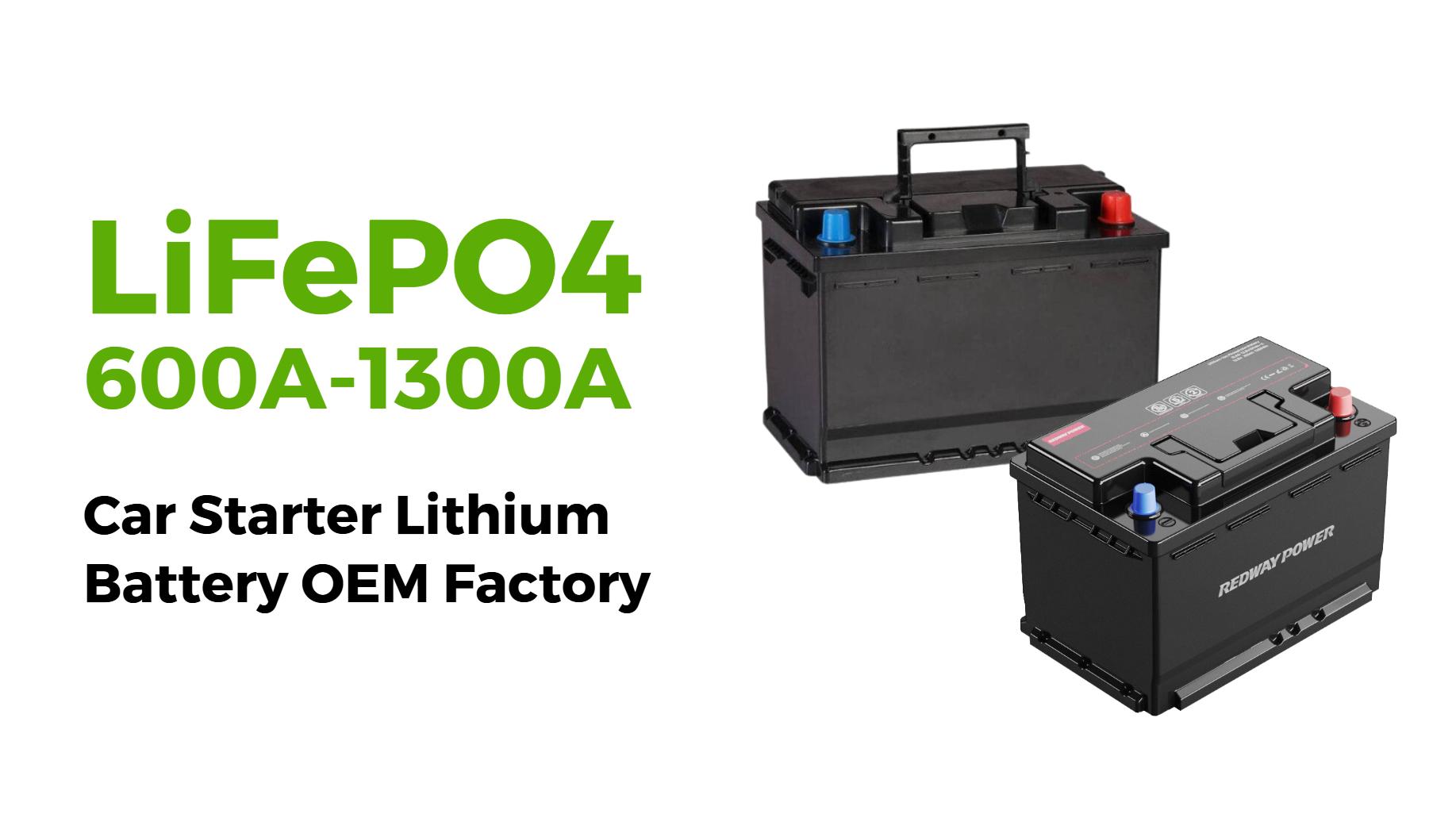
How Are LiFePO4 Car Starter Batteries Revolutionizing the Industry?
LiFePO4 car starter batteries are transforming automotive energy solutions with lightweight construction, rapid cold-cranking capability, and up to ten times longer lifespan than traditional lead-acid batteries. They operate efficiently in extreme temperatures (-20°C to 60°C), require no maintenance, and are fully recyclable, providing environmentally sustainable and reliable power for modern vehicles and advanced automotive applications.
What Makes LiFePO4 Batteries Superior to Traditional Lead-Acid?
LiFePO4 batteries offer significant advantages over lead-acid batteries in automotive performance, safety, and longevity:
-
Cycle Life: LiFePO4 batteries provide 2,000–5,000 cycles, compared to 300–500 for lead-acid batteries, extending operational life and reducing replacement frequency.
-
Weight Reduction: They are approximately 50% lighter, enhancing fuel efficiency and vehicle handling. A 12V 60Ah LiFePO4 battery weighs 4kg versus 8kg for a lead-acid battery.
-
Thermal Stability: Chemically stable, LiFePO4 batteries resist thermal runaway, ensuring reliable operation under extreme conditions.
-
Depth of Discharge: Up to 95% usable capacity enables more effective energy utilization than lead-acid batteries.
Comparison Table: LiFePO4 vs Lead-Acid Batteries
| Feature | LiFePO4 | Lead-Acid |
|---|---|---|
| Cycle Life | 2,000–5,000 | 300–500 |
| Weight | 50% lighter | Standard |
| Depth of Discharge | 95% | 50% |
| Thermal Runaway Risk | None | Moderate |
Redway ESS leverages these advantages to deliver starter batteries optimized for both automotive and industrial applications.
How Do LiFePO4 Batteries Perform in Extreme Temperatures?
LiFePO4 batteries maintain approximately 80–85% capacity at -20°C and near full efficiency at 50–60°C. Advanced thermal management systems stabilize internal temperatures within ±5°C, ensuring consistent power output in extreme conditions. Military-grade carbon nanotube versions operate down to -40°C, providing reliable cold-cranking performance for specialized vehicles.
Temperature Performance Table
| Temperature | LiFePO4 Capacity | AGM Capacity |
|---|---|---|
| -20°C | 85% | 55% |
| 60°C | 95% | 80% |
| Thermal Runaway | None | Moderate |
Can LiFePO4 Batteries Integrate With Modern Vehicle Electronics?
LiFePO4 batteries include sophisticated battery management systems (BMS) compatible with start-stop systems, ADAS, and EV auxiliary networks. They provide stable voltage output (13.2–14.6V), preventing damage to sensitive electronics. CAN bus compatibility allows real-time monitoring through vehicle dashboards. Redway ESS ensures OEM-grade integration for both legacy and next-generation vehicles.
What Cost Savings Do LiFePO4 Starter Batteries Provide?
Although LiFePO4 batteries have a higher upfront cost ($200–$500 versus $100–$200 for lead-acid), total ownership costs are significantly lower. Over eight years, operators experience approximately 68% savings due to reduced replacements and lower alternator loads. Extended warranties (5–10 years) further enhance ROI, making LiFePO4 a cost-efficient long-term solution.
What Innovations Are Emerging in LiFePO4 Starter Battery Technology?
Current innovations in LiFePO4 technology include:
-
Graphene-enhanced cathodes, increasing cold-cranking amps by 35%.
-
Self-healing electrolytes to repair micro-damage.
-
Wireless SOC monitoring via Bluetooth 5.3.
-
Laser-welded prismatic cells delivering 1,500A peak at -30°C.
-
Solid-state designs supporting 5,000+ cycles with ultra-fast charging.
Redway ESS integrates these technologies into OEM-grade solutions, ensuring high performance, reliability, and compatibility with modern vehicles.
Redway ESS Expert Views
“LiFePO4 starter batteries are redefining automotive power systems with high energy density, fast cold-cranking, and extended lifespan. Our tests show over 90% energy recovery from regenerative braking, outperforming traditional batteries. These batteries also reduce wiring weight by up to 40%, enhancing both performance and sustainability. Redway ESS delivers these innovations directly to OEM clients, supporting long-term operational reliability and efficiency.”
What Are LiFePO4 Car Starter Battery Lifespan Advantages?
LiFePO4 batteries last 8–10 years, far exceeding lead-acid’s 2–3 years, with 2,000+ cycles at 80% capacity. They resist sulfation and acid stratification, and low self-discharge (3% per month) preserves charge over time. Their stable chemistry guarantees reliable starts even in extreme conditions.
How Do LiFePO4 Batteries Improve Automotive Starting Efficiency?
LiFePO4 batteries provide high instantaneous power exceeding 1,000 CCA while maintaining voltage above 12V under load. Reduced internal resistance allows partial charge operation without harm. Start-stop systems enjoy three times longer support than with lead-acid batteries, and parallel configurations improve overall power delivery. These features optimize energy recovery in hybrid and electric vehicles.
Where Are LiFePO4 Starter Batteries Used Beyond Cars?
LiFePO4 batteries serve diverse applications, including:
-
Trucks: Diesel engine starts at -30°C.
-
Marine: Waterproof, gas-free operation.
-
RVs: Dual-use deep-cycle power.
-
Agriculture: Vibration and shock resistance.
-
Aviation: FAA-approved, lightweight solutions.
-
Emergency Vehicles: Rapid recharge for repeated deployment.
-
Solar Systems: Reliable 12V/24V renewable energy support.
Redway ESS offers tailored solutions for these sectors, ensuring durability, safety, and consistent performance.
Why Do LiFePO4 Starter Batteries Reduce Environmental Impact?
LiFePO4 batteries use non-toxic materials, are 99% recyclable, and produce 60% lower carbon emissions than lead-acid alternatives. Extended lifespans reduce waste, and production consumes less energy. Their compatibility with solar charging supports sustainable energy systems and promotes circular economy practices.
Conclusion
LiFePO4 car starter batteries deliver unmatched reliability, efficiency, and sustainability. With extended lifespan, superior temperature tolerance, and high power output, they redefine automotive energy solutions. Redway ESS continues to lead with OEM-grade, high-performance products, enabling safer, lighter, and environmentally responsible vehicles while reducing long-term operational costs.
FAQs
Do LiFePO4 batteries require special chargers?
Modern LiFePO4 batteries are compatible with vehicle alternators (13.8–14.6V) and perform best with smart chargers that optimize cycle life.
Can LiFePO4 batteries power additional accessories?
Yes. Continuous discharge ratings of 200–300A support winches, audio systems, and auxiliary lights. Dual-battery setups maintain starting reliability.
Are LiFePO4 batteries suitable for classic cars?
Specialized models maintain 6V configurations, provide 800–1,200 CCA, and resist vibrations, eliminating acid spillage risks.
How long do LiFePO4 batteries last compared to lead-acid?
LiFePO4 batteries last 8–10 years, surviving over 2,000 cycles, far exceeding lead-acid lifespans of 2–3 years.
What makes LiFePO4 batteries environmentally friendly?
They are free from heavy metals, 99% recyclable, and compatible with renewable energy systems, reducing emissions and ecological impact.