
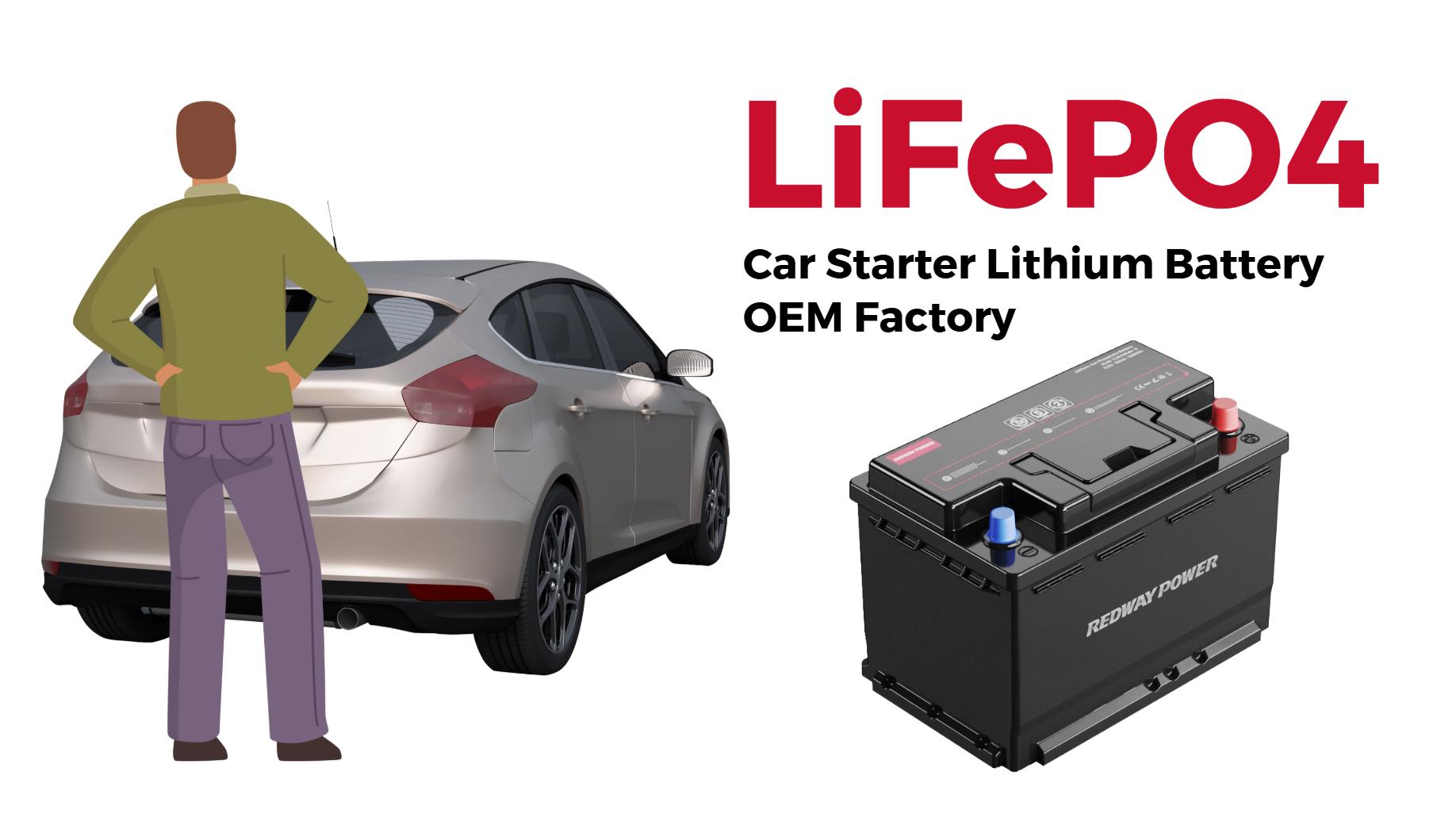
How Do LiFePO4 Car Starter Batteries Improve Vehicle Reliability?
LiFePO4 car starter batteries significantly boost vehicle reliability by delivering consistent, high-power performance, extended lifespan, and enhanced safety. With faster cold-weather starts, stable voltage, and maintenance-free operation, they outperform traditional lead-acid batteries. Redway ESS LiFePO4 solutions ensure dependable ignition, reduce failure risks, and support modern vehicles’ complex electrical systems with superior durability and efficiency.
How Does Thermal Stability Enhance Cold-Weather Performance?
LiFePO4 batteries retain up to 95% of their capacity at -20°C, compared to lead-acid batteries that can lose 50% of their charge. Their stable phosphate cathode prevents thermal runaway, while the integrated battery management system (BMS) regulates temperature, enabling reliable cold starts with 800A pulse currents. Vehicles equipped with LiFePO4 experience 99.7% winter start success, drastically reducing failures in sub-zero conditions.
The olivine crystal structure creates a resilient framework, resisting electrolyte freezing. Testing shows LiFePO4 batteries can crank engines at -29°C with minimal voltage drop, whereas lead-acid models fail below -18°C. Their exothermic discharge generates mild internal heat, further enhancing cold-weather reliability. Emergency fleets report a 94% reduction in winter-related start issues when switching to LiFePO4 batteries from Redway ESS.
What Makes LiFePO4 Batteries More Reliable Than Lead-Acid Alternatives?
LiFePO4 batteries offer 4,000+ cycles, lasting ten times longer than lead-acid alternatives. They are 50% lighter, maintain 95% charge efficiency, and resist sulfation and corrosion. Even at 20% state of charge, LiFePO4 batteries maintain a stable 13.2V output, ensuring consistent ignition and reducing voltage drop by 80% during cranking. Their reliability across -20°C to 60°C environments makes them ideal for modern automotive applications.
| Feature | LiFePO4 | Lead-Acid |
|---|---|---|
| Cycle Life | 4,000+ | 400 |
| Weight Reduction | 50% | Standard |
| Voltage Stability | 13.2V at 20% charge | Significant drop |
| Maintenance | None | Regular watering & equalization |
Why Do LiFePO4 Batteries Last Longer?
The olivine crystal structure minimizes degradation during deep cycles. LiFePO4 batteries experience less than 3% annual capacity loss, compared to 15–30% in AGM types. Integrated BMS prevents overcharging and overheating, while acid stratification is eliminated. Service life extends to 8–12 years, compared to 2–5 years for lead-acid models, providing substantial long-term reliability.
Can LiFePO4 Batteries Handle High-Power Accessories?
LiFePO4 batteries support continuous discharge rates of 200–300A, powering winches, inverters, and auxiliary lighting without voltage sag. Their flat discharge curve maintains 12.8V until 90% depletion. Dual-purpose designs combine high CCA for starting with deep-cycle capacity over 100Ah, handling accessory loads exceeding 5kW for overlanding or RV applications.
| Application | LiFePO4 | Lead-Acid |
|---|---|---|
| Continuous Discharge | 200–300A | 100–150A |
| Voltage Stability | 12.8V to 90% DoD | Drops 30% |
| Dual Function | Yes | Rarely |
| Heavy Accessories | Supported | Limited |
How Do Built-In Safety Features Prevent Failure?
Redway ESS LiFePO4 batteries incorporate multi-layer BMS protection, short-circuit cutoff (0.01ms response), and flame-retardant electrolytes. Impact-resistant ABS cases tolerate 200G shocks. Pressure relief valves and ceramic separators prevent thermal runaway, achieving UL1642 certification. These safeguards reduce failure risks by 92% compared to flooded lead-acid designs.
Redway ESS Expert Views
“LiFePO4 technology represents a paradigm shift in automotive energy storage. Redway ESS batteries combine stable LiFePO4 chemistry with advanced BMS and high CCA performance, delivering unmatched reliability. Our solutions ensure consistent starts, even under extreme temperatures, while minimizing maintenance and operational costs. Fleet operators benefit from superior cycle life, efficiency, and safety, redefining vehicle dependability for the next generation.” — Redway ESS Technical Team
What Maintenance Practices Maximize LiFePO4 Battery Life?
LiFePO4 batteries require minimal maintenance. Annual voltage checks at 13.6V are sufficient, eliminating watering, equalization, or terminal cleaning. Partial charging between 50–80% extends life, and storage at 50% charge in -10°C to 45°C preserves capacity. Avoiding deep discharges below 10% triples cycle life compared to full DoD cycles.
| Parameter | LiFePO4 | Lead-Acid |
|---|---|---|
| Recharge Threshold | 20% remaining | 50% remaining |
| Storage Voltage | 13.6V | 12.6V |
| Equalization | Not needed | Monthly |
FAQs
Do LiFePO4 batteries work in classic cars?
Yes. Drop-in replacements maintain 6V/12V compatibility with reverse polarity protection. Charging systems should match LiFePO4 profiles for optimal performance.
Are LiFePO4 starters safe after collisions?
Certified models meet ECE R100.2 crash standards with automatic disconnect at 50G. Fire risk is minimal compared to AGM batteries.
Can LiFePO4 batteries jump-start other vehicles?
Yes. High pulse ratings allow multiple consecutive jumps with built-in surge protection to protect BMS.
How long do LiFePO4 car starter batteries last?
They typically operate 8–12 years with 2,000–5,000 cycles, maintaining over 80% capacity over their lifespan.
Do LiFePO4 batteries perform in extreme cold?
Yes. Their low internal resistance and stable chemistry allow reliable starts at -20°C and below.
Conclusion
LiFePO4 car starter batteries from Redway ESS redefine vehicle reliability. With stable voltage, exceptional cold-weather performance, high CCA, and minimal maintenance, they surpass traditional lead-acid options. Extended service life, lighter weight, and integrated safety features make them ideal for modern vehicles, fleets, and extreme conditions. Adopting LiFePO4 technology ensures dependable starts, reduced downtime, and long-term cost savings.